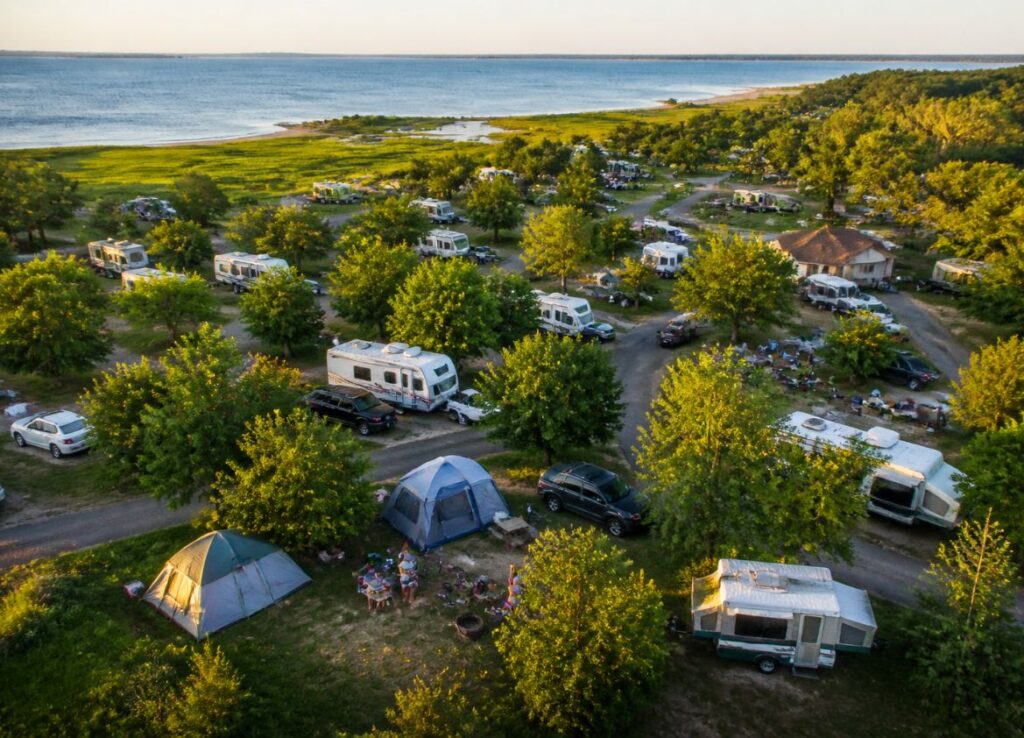
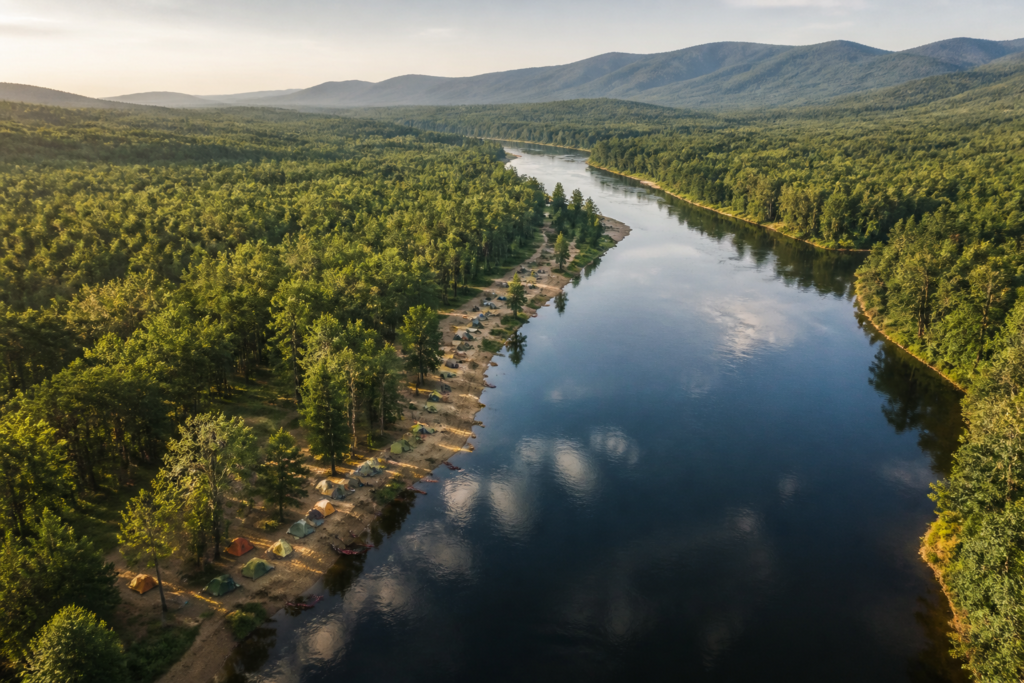
Saco River camping refers to camping along the Saco River corridor in Maine and New Hampshire, one of the most popular river camping destinations in the northeastern United States. Campers can choose from commercial campgrounds with full amenities, primitive sandbar sites accessible only by canoe, or established state and private parks. The river runs roughly 136 miles from Crawford Notch, NH to Saco Bay, ME, offering options for beginners and experienced paddlers alike.
Key Takeaways
- The Saco River flows through both New Hampshire and Maine, with the most popular camping stretch running between Fryeburg, ME and Hiram, ME.
- Sandbar camping on the Saco is free on public land but requires a Leave No Trace approach and a valid fire permit in most areas.
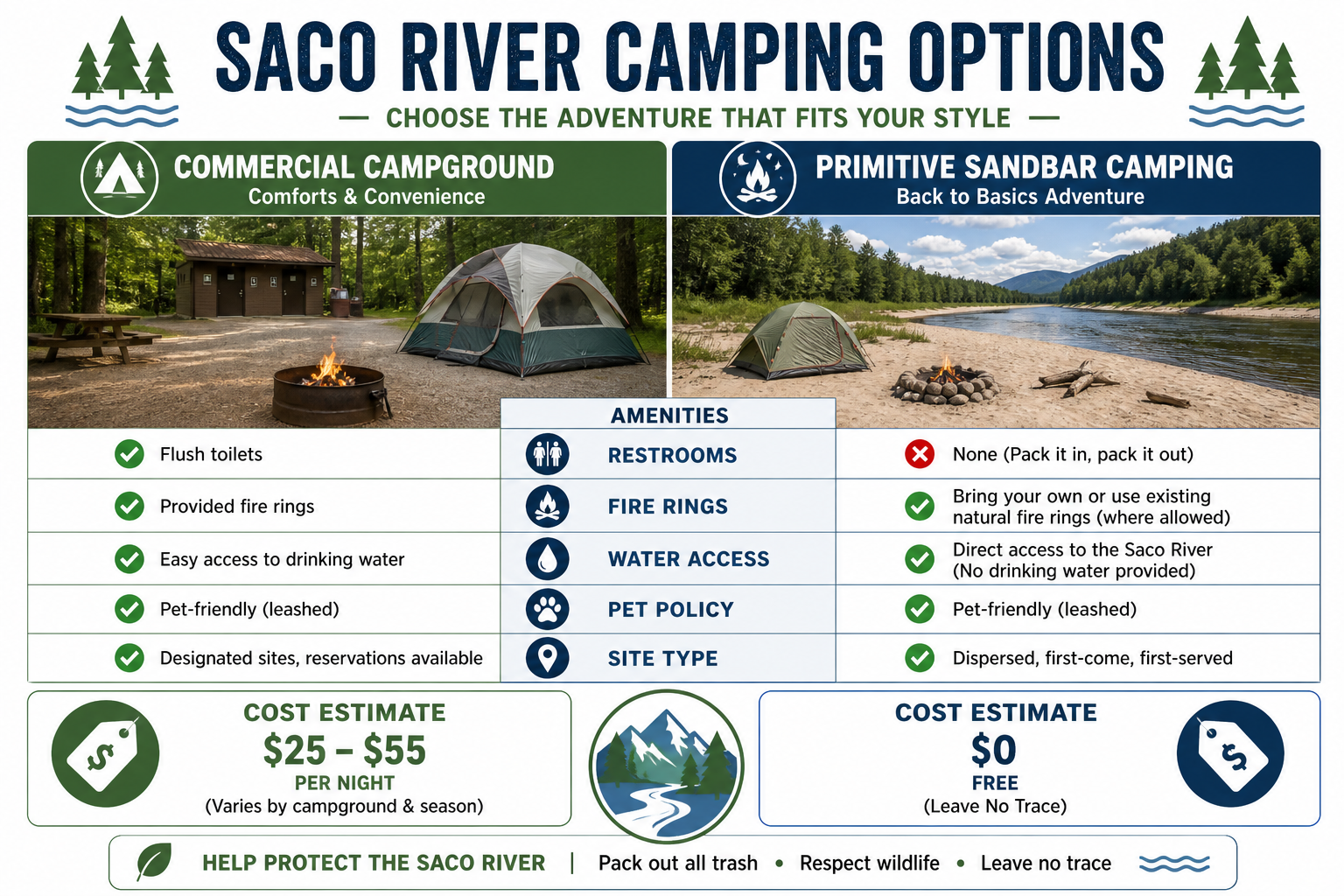
- Commercial campgrounds along the river offer amenities like restrooms, showers, canoe rentals, and shuttle services, typically ranging from $25–$60 per night (2026 estimates).
- The best camping season runs from late May through early September, with July and August being the busiest months.
- Dogs are generally allowed on public sandbars but policies vary by commercial campground.
- Alcohol regulations on the Saco River are strictly enforced in certain towns; check local ordinances before your trip.
- Water levels on the Saco River directly affect safety and sandbar availability always check USGS gauge data before launching.
- Reservations at commercial campgrounds are strongly recommended for weekends from June through August.
- Poison ivy and black flies are common along the riverbanks; preparation matters.
- Shuttle services are widely available and make point-to-point trips much easier to plan.
What Makes Saco River Camping Unique?
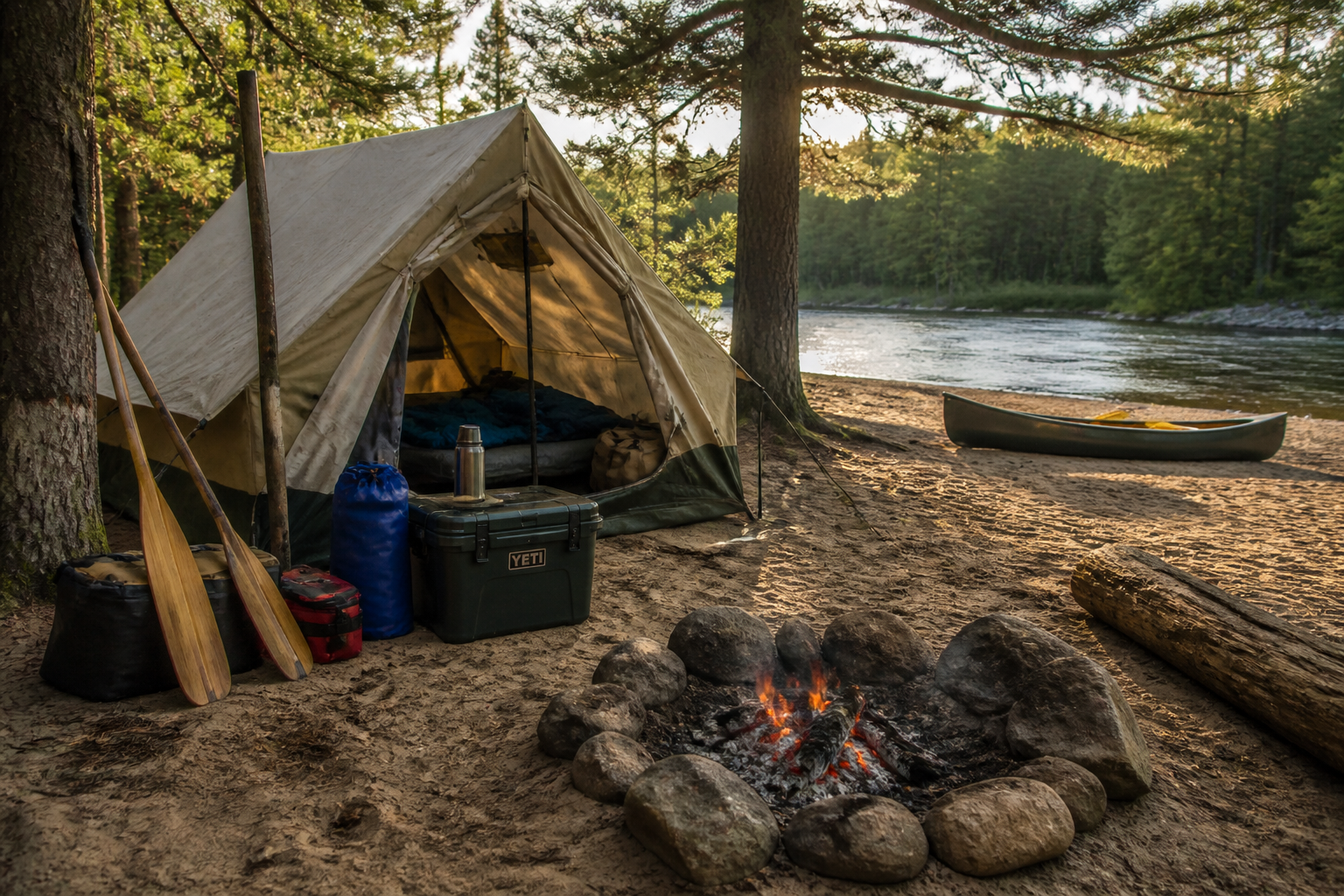
The Saco River is one of the few rivers in the Northeast where you can paddle downstream and camp directly on sandy beaches without a permit, as long as those sandbars are on public land. That combination of accessibility, natural beauty, and relatively calm water makes it a standout destination.
The river’s gradient is gentle through its most popular camping sections, making it suitable for families with children, beginner paddlers, and anyone who wants a relaxed float rather than a whitewater challenge. The sandy banks formed by glacial deposits create natural campsites that feel remote even when you’re only a few miles from a road.
What sets it apart from other river camping destinations:
- Sandy, flat riverbanks that are easy to set up camp on
- Warm summer water temperatures (often 70–75°F in July)
- Multiple entry and exit points, making trip length flexible
- A mix of primitive and commercial camping options within the same corridor
- Proximity to major Northeast cities (Boston is roughly 2.5 hours away)
“The Saco offers something rare: a genuine wilderness feel within easy driving distance of millions of people.” — A common sentiment among regular visitors, reflecting the river’s regional reputation.
Where Are the Best Saco River Camping Spots?
The best camping on the Saco River is concentrated between Fryeburg, ME and Hiram, ME — a stretch of roughly 30 miles that combines good water levels, accessible sandbars, and nearby services.
Top Sections and Campgrounds
Fryeburg to Hiram (Maine) Most Popular Stretch
This is the heart of Saco River camping. The river moves at a comfortable pace, sandbars appear regularly, and several commercial outfitters operate in this zone.
- Saco River Camping Area (Fryeburg, ME): A well-known commercial campground with riverside sites, canoe rentals, and shuttle service.
- Canal Bridge Campground (Fryeburg, ME): Smaller and quieter, popular with families.
- Woodland Acres Camp ‘N’ Canoe (Brownfield, ME): A longer-running operation with pull-out shuttle options.
Conway, NH Area
The stretch near Conway, NH tends to be faster-moving and slightly more technical. It’s better suited for paddlers with some experience. Camping options here lean more toward established campgrounds rather than primitive sandbars.
Primitive Sandbar Camping
Sandbars on public land along the Saco are free to use. The challenge is knowing which sandbars are public versus private the Maine Bureau of Parks and Lands publishes maps that help with this. Key rules:
- No established fire rings on most sandbars; bring a fire pan or use a fire permit
- Pack out all trash
- Camp at least 200 feet from any water source where possible
- No permanent structures
How Do You Plan a Saco River Camping Trip?
Planning a Saco River camping trip comes down to four decisions: trip length, put-in and take-out points, camping style (primitive vs. commercial), and shuttle logistics.
Step-by-Step Planning Guide
- Choose your trip length. A single overnight covers roughly 8–12 miles. A three-day trip can cover 20–30 miles comfortably without rushing.
- Check water levels. The USGS maintains real-time gauge data for the Saco River. The gauge at Cornish, ME (USGS site 01066000) is the most referenced for the popular Maine section. Ideal paddling levels are generally between 2.5 and 5 feet on this gauge. Above 5 feet, the river moves fast and sandbars disappear.
- Pick your put-in and take-out. Common put-ins include the Fryeburg boat launch and the Route 302 bridge area. Common take-outs include Hiram Dam and the Limington area.
- Book or identify your campsite. If using a commercial campground, book early — weekends in July fill up weeks in advance. If sandbar camping, identify 2–3 backup options in case your first choice is occupied or flooded.
- Arrange a shuttle. Most outfitters in the Fryeburg area offer shuttle services for $15–$30 per person (2026 estimate). Alternatively, use two vehicles and spot one at the take-out.
- Get a fire permit. In Maine, open fires require a permit during dry conditions. Check with Maine Forest Service before your trip.
- Pack appropriately. See the gear section below.
What Gear Do You Need for Saco River Camping?
Saco River camping is accessible even without specialized gear, but a few essentials make the trip safer and more comfortable.
Essential Gear List
On the Water
- Canoe or kayak (rentals available from multiple Fryeburg-area outfitters)
- Personal flotation device (PFD) required by law for all paddlers
- Dry bags for gear and food
- Paddle and spare
- Bilge pump or sponge
At Camp
- Tent with a footprint (sandy ground drains well but can be uneven)
- Sleeping bag rated for 40°F or lower (nights can be cool even in July)
- Camp stove and fuel (fires aren’t always possible)
- Headlamp with extra batteries
- First aid kit
- Trowel for cat holes if no facilities nearby
Health and Safety
- Insect repellent (black flies are heavy in May–June; mosquitoes peak in July)
- Sunscreen
- Poison ivy identification knowledge — it grows on many riverbanks
- Water filter or purification tablets (don’t drink river water untreated)
Common mistake: Packing too much. Every pound you bring has to go in the canoe. Experienced Saco campers often say the biggest gear lesson is learning what to leave behind.
What Are the Rules and Regulations for Saco River Camping?
Rules on the Saco River vary depending on whether you’re on public land, private land, or within a commercial campground. Ignoring these can result in fines or forced relocation mid-trip.
Key Regulations to Know
Alcohol: Several towns along the Saco including parts of Fryeburg have ordinances restricting alcohol on the river and riverbanks. These rules are actively enforced during peak season. Check with the specific town before assuming it’s allowed.
Fires: Open fires require a permit from the Maine Forest Service during dry periods. Fire bans can be issued with little notice. Always carry a camp stove as a backup.
Camping on private land: Much of the Saco’s riverbank is privately owned. Camping without permission is trespassing. Use the Maine Bureau of Parks and Lands public land maps to identify legal primitive camping areas.
Waste: Maine follows Leave No Trace principles. Pack out all trash. Human waste must be buried at least 200 feet from water, trails, and camp — or packed out if you’re in a high-use area.
Pets: Dogs are allowed on public sandbars. Commercial campgrounds have their own pet policies, which vary widely.
How Much Does Saco River Camping Cost?
Costs depend heavily on whether you’re camping primitive-style or using commercial facilities.
Cost Breakdown (2026 Estimates)
| Expense | Primitive Sandbar | Commercial Campground |
|---|---|---|
| Campsite fee | Free (public land) | $25–$60/night |
| Canoe rental (per day) | $40–$65 | $40–$65 (often bundled) |
| Shuttle service | $15–$30/person | Often included or discounted |
| Fire permit | Free (Maine Forest Service) | N/A (campground handles) |
| Parking | Free at public launches | Included or $5–$10/day |
Choose primitive camping if: You want a quieter experience, you’re comfortable with self-sufficiency, and you’ve done the research on public land locations.
Choose a commercial campground if: You’re new to river camping, you want access to restrooms and showers, or you’re traveling with young children.
What Are the Biggest Mistakes First-Time Saco River Campers Make?
Most problems on the Saco are avoidable with basic preparation. Here are the most common errors, based on the experience of frequent visitors and outfitters in the area.
- Not checking water levels. High water wipes out sandbars and makes the river significantly more dangerous. Always check the USGS gauge before launching.
- Underestimating mileage. Eight miles on a river takes longer than eight miles on a road. Plan for 2–3 miles per hour at a relaxed pace.
- Camping on private land. Many first-timers assume any sandbar is public. It isn’t. Do the map research first.
- Skipping the shuttle plan. Ending up miles from your car with no plan is a common and avoidable problem.
- Bringing too much food in non-bear-proof containers. Black bears are present in the area. Use bear canisters or hang food properly.
- Ignoring poison ivy. It’s widespread on Saco riverbanks. Learn to identify it before you go.
FAQ: Saco River Camping
Do I need a permit to camp on the Saco River?
No permit is required for primitive camping on public land along the Saco River. However, a fire permit from the Maine Forest Service is required for open fires during dry conditions.
Can beginners canoe and camp on the Saco River?
Yes. The most popular camping stretch between Fryeburg and Hiram is suitable for beginners. The current is gentle, and the river is wide enough to navigate without advanced skills.
When is the best time to visit for Saco River camping?
Late June through mid-August offers the best combination of warm water, stable weather, and good sandbar conditions. May can be cold and buggy; September brings cooler nights but fewer crowds.
Are there bears on the Saco River?
Black bears are present in the region. Proper food storage is important. Use a bear canister or hang food at least 10 feet high and 4 feet from the trunk of a tree.
Can I bring my dog camping on the Saco River?
Dogs are allowed on public sandbars. Commercial campground policies vary — call ahead to confirm.
How long does it take to paddle from Fryeburg to Hiram?
At a relaxed pace of 2–3 miles per hour, the roughly 30-mile stretch takes 2–3 days. Most campers break it into two overnight stops.
Is the Saco River safe for swimming?
Yes, in most conditions. The river is a popular swimming destination. Avoid swimming near dams or during high water events.
Are campfires allowed on Saco River sandbars?
Campfires are allowed when conditions permit and a fire permit is obtained. During dry periods, fire bans are common. Always carry a stove as a backup.
What towns have alcohol restrictions on the Saco River?
Regulations change periodically. As of 2026, parts of Fryeburg and neighboring towns have restricted alcohol on the river and its banks. Check with local authorities before your trip.
Where can I rent a canoe near the Saco River?
Several outfitters in Fryeburg, ME and Conway, NH offer canoe and kayak rentals, including shuttle services. Saco River Canoe and Kayak and Saco Bound are among the well-known options in the area.
Is cell service available along the Saco River?
Cell service is spotty to nonexistent on many sections of the river. Download offline maps before your trip and don’t rely on your phone for navigation.
What’s the water temperature like in summer?
Water temperatures on the Saco typically reach 70–75°F in July, making it comfortable for swimming and paddling. Early June and September see cooler temperatures around 60–65°F.
Conclusion: Is Saco River Camping Right for You?
Saco River camping offers a rare mix of accessibility and genuine outdoor experience. Whether you’re a first-time camper looking for a gentle introduction to river travel or an experienced paddler who wants a multi-day float through New England’s forests, the Saco delivers.
Actionable next steps:
- Check USGS water levels at the Cornish, ME gauge before finalizing your trip dates.
- Reserve your campsite or identify public sandbar locations using Maine Bureau of Parks and Lands maps.
- Contact a local outfitter in Fryeburg for canoe rentals and shuttle logistics — they know current conditions better than any website.
- Get your fire permit from the Maine Forest Service if you plan to have a campfire.
- Pack light, plan your route, and tell someone your itinerary before you launch.
The Saco is one of the most rewarding camping experiences in the Northeast. With the right preparation, it’s also one of the most straightforward. Start planning now, and you’ll be on the water before summer peaks.