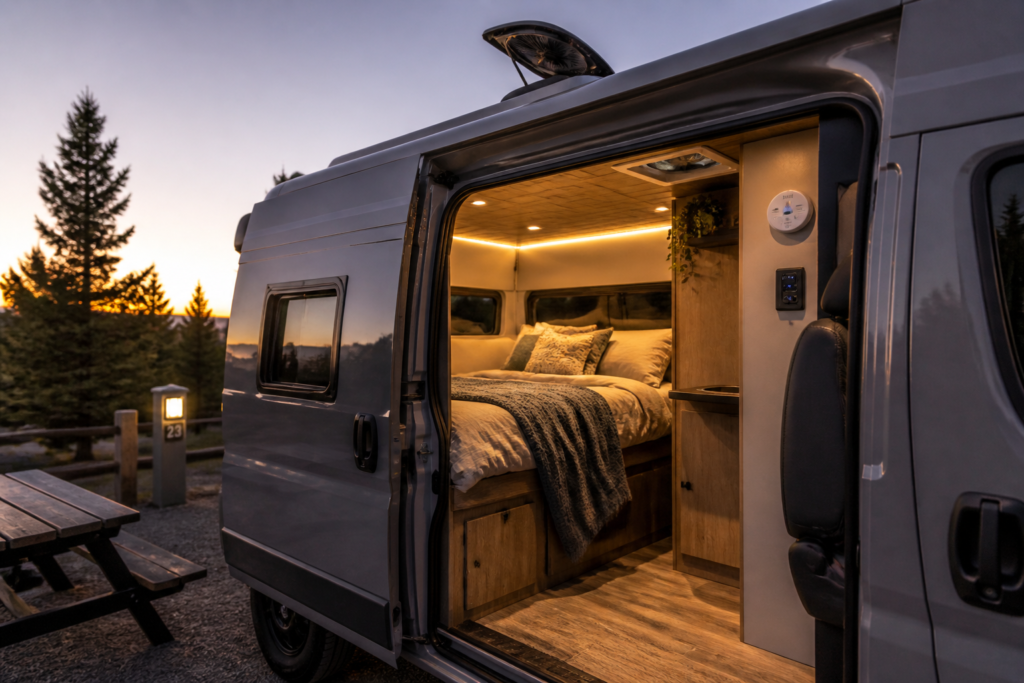
Yes, sleeping in a van is safe for most people when you take the right precautions. The risks carbon monoxide poisoning, theft, and extreme temperatures are real but manageable with proper preparation. Thousands of van lifers, digital nomads, and weekend road trippers do it safely every night across North America and Europe.
Key Takeaways
- Carbon monoxide is the biggest silent danger — always install a CO detector and never run a gas heater in a sealed van overnight.
- Location matters more than anything else — choosing where you park dramatically affects your safety.
- A few low-cost upgrades (window locks, a door bar, blackout curtains) make van sleeping significantly more secure.
- Temperature management is critical — heat kills faster than cold in a sealed vehicle.
- Stealth camping reduces unwanted attention and improves safety in urban settings.
- Tell someone your location every night — this one habit could save your life.
- Legal risks vary by location — sleeping in a van is legal in many places but restricted in others; always check local ordinances.
- Van life is genuinely safer than many people assume — the van life community reports far more positive experiences than dangerous ones.
Is It Safe To Sleep In A Van? Understanding the Real Risks
Sleeping in a van is safe for the vast majority of people who do it but “safe” doesn’t mean “risk-free.” The key is knowing which risks are worth worrying about and which are overblown.
The most common fears people have about van sleeping fall into a few categories:
- Carbon monoxide poisoning from cooking or heating appliances
- Break-ins or personal safety threats
- Extreme heat or cold
- Legal trouble from parking in the wrong spot
- Health issues from poor ventilation or cramped sleeping conditions
Of these, carbon monoxide and heat are statistically the most dangerous. Break-ins, while a real concern, are far less common than most beginners expect especially with the right setup and location choices.
“The van life community has grown dramatically. In 2026, more people than ever are choosing freedom on wheels as a primary or part-time lifestyle — and most of them sleep just fine.”
Carbon Monoxide The Invisible Threat You Must Address
Carbon monoxide (CO) poisoning is the most serious safety risk for anyone sleeping in a van. It’s colorless, odorless, and can be fatal within hours. Any combustion appliance — propane stoves, diesel heaters, gasoline generators — produces CO.
How to prevent CO poisoning in a camper van:
- Install a CO detector — place it near your sleeping area, not just near appliances. Replace batteries every six months.
- Never run a propane stove for heat — it’s one of the most common mistakes beginners make.
- Use a diesel heater with proper external venting — brands like Webasto and Espar are popular in the van life community because they vent exhaust outside the vehicle.
- Crack a window or roof vent when cooking — even a small gap helps.
- Never idle your engine for heat in a closed or partially closed space.
Choose this if: You’re using any combustion appliance inside your van. A quality CO detector costs $20–$40 and is non-negotiable road trip essential gear.
Common mistake: Assuming that “just cracking a window” is enough when running a propane appliance overnight. It isn’t. Use a properly vented heater or an electric option like a heated blanket powered by a lithium battery bank.
How to Choose a Safe Parking Spot for Van Sleeping
Where you park is the single biggest factor in how safe your night will be. A well-chosen spot reduces risk from theft, harassment, and legal issues simultaneously.

Best parking options (ranked by safety and comfort):
| Location Type | Safety Level | Cost | Notes |
|---|---|---|---|
| Established campgrounds | ⭐⭐⭐⭐⭐ | $15–$45/night | Best for beginners |
| Walmart/Cracker Barrel parking lots | ⭐⭐⭐⭐ | Free | Many locations allow overnight parking |
| BLM/National Forest dispersed camping | ⭐⭐⭐⭐ | Free | Remote but very safe; check regulations |
| Residential streets | ⭐⭐⭐ | Free | Varies by city; check local laws |
| Industrial areas | ⭐⭐ | Free | Quieter but less foot traffic |
| Isolated, unknown areas | ⭐ | Free | Avoid until you know the area well |
Rules for picking a spot:
- Arrive before dark so you can assess the area properly.
- Drive through the area first — trust your gut. If something feels off, move on.
- Look for other vehicles parked overnight; it’s usually a sign the spot is tolerated.
- Avoid areas with “No Overnight Parking” signs — the legal hassle isn’t worth it.
- Use apps like iOverlander, FreeRoam, or The Dyrt to find community-vetted spots.
Is It Safe To Sleep In a Van Alone, Especially for Solo Travelers?
Solo van sleeping is generally safe, but solo travelers — particularly women traveling alone — should take extra precautions. The van life community includes a huge number of solo female travelers who do this full-time and report feeling safer than they expected.
That said, a few specific habits make a real difference:
- Don’t share your real-time location on social media while you’re parked for the night.
- Tell a trusted person your nightly location via text — make it a routine.
- Keep your driver’s seat accessible so you can leave quickly if needed.
- Install window covers and blackout curtains — if people can’t see inside, they’re less curious about what’s in there.
- A door security bar or van-specific deadbolt adds a meaningful layer of physical security.
- Keep a charged phone, a personal alarm, and a flashlight within arm’s reach.
Edge case: If you’re parking in an unfamiliar city, consider paying for a campground or RV park for your first night in the area. Get a feel for the region before committing to free spots.
Van Life Safety Gear: What You Actually Need
You don’t need to spend thousands on safety equipment. A focused list of road trip essentials covers the real risks without overcomplicating your camper van setup.
The non-negotiable safety kit:
- Carbon monoxide detector — Kidde or First Alert models work well; replace every 5–7 years.
- Smoke detector — small, battery-powered; mount near your cooking area.
- Fire extinguisher — a 2.5 lb ABC extinguisher fits easily under a seat.
- First aid kit — include any personal medications, blister care, and a basic trauma kit.
- Emergency roadside kit — jumper cables, reflective triangles, a tire inflator.
- Portable weather radio — critical for off-grid living in areas prone to storms.
- GPS tracker — hide one in your van (Tile Ultra or Apple AirTag work; dedicated GPS trackers are better for theft recovery).
Nice-to-have additions:
- A door security bar (like the Master Lock 265DCCSEN)
- Window lock pins for sliding and rear doors
- A dash cam with parking mode (records while you sleep)
- A solar-powered battery bank for device charging without running the engine
Temperature Safety Heat and Cold Management in a Van
Extreme temperatures are a genuine danger in a van heat more so than cold. A sealed van in direct summer sun can reach lethal internal temperatures within 30–60 minutes, according to studies on vehicle heat buildup (Stanford University School of Medicine, 2005 the physics haven’t changed).
Staying cool:
- Park in shade whenever possible this is the single most effective strategy.
- Install a roof vent fan (Maxxair or Fan-Tastic are popular in the van life community) they pull hot air out and create airflow.
- Use reflective window covers on all windows when parked.
- A 12V portable fan or a small evaporative cooler helps on mild nights.
- For serious heat: a 12V compressor cooler (like the BougeRV or Iceco) can double as a fridge and helps lower ambient temperature slightly.
Staying warm:
- A properly vented diesel heater (Webasto, Espar, or the more affordable Chinese-brand options like Vevor) is the gold standard for off-grid living in cold climates.
- A quality sleeping bag rated for temperatures below your expected low is your backup if the heater fails.
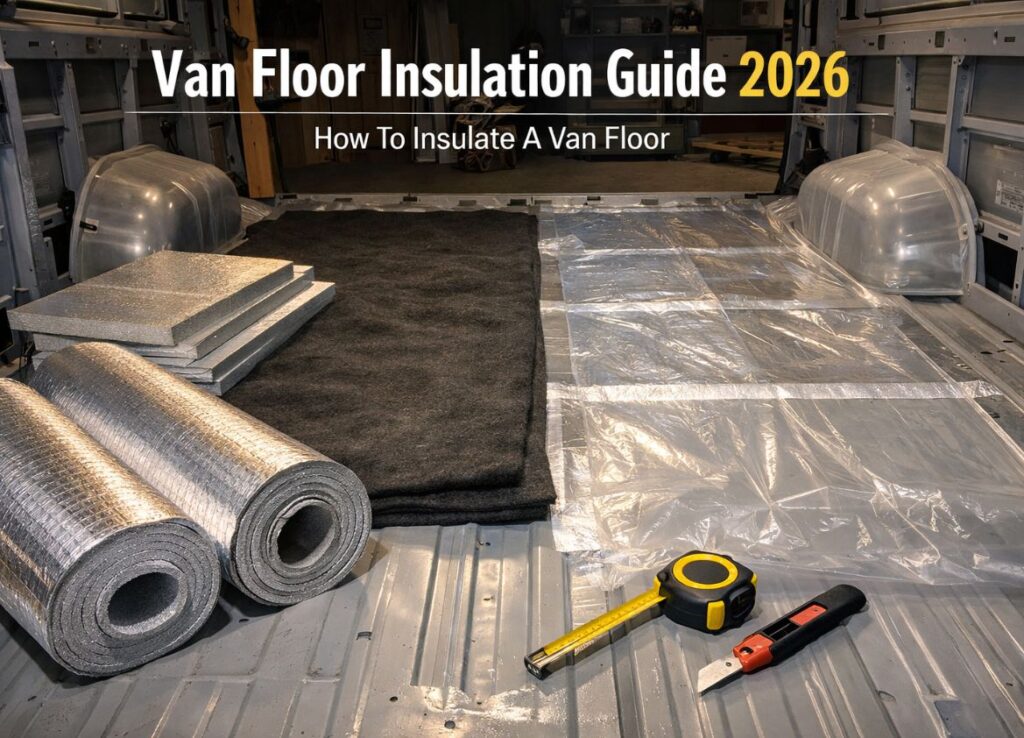
- Insulate your van well Thinsulate or spray foam in the walls makes a massive difference in cold-weather camping life adventure.
- Never use a propane heater overnight without proper ventilation the CO risk is too high.
Legal Considerations: Is Sleeping in Your Van Actually Legal?
Sleeping in a van is legal in many places but restricted or prohibited in others. The legal landscape varies significantly by country, state, city, and even neighborhood.
General rules for 2026:
- On BLM land and National Forests in the U.S.: dispersed camping (including van sleeping) is generally legal for up to 14 days in one spot. Check with the local ranger district.
- Walmart and other private lots: many locations allow overnight parking, but always check with the store manager first. Policies vary by location.
- City streets: many U.S. cities (including Los Angeles, San Francisco, and Seattle) have ordinances restricting or banning sleeping in vehicles. Check local laws before parking.
- Rest areas: legal for overnight parking in many U.S. states, but some limit stays to 8–10 hours.
- National Parks: you must camp in designated campgrounds; dispersed van sleeping is not permitted.
Practical tip: Apps like Campendium and FreeRoam include user reports on whether spots are legal and enforced. The van life community is excellent at sharing this kind of local knowledge.
Common Van Sleeping Mistakes (and How to Avoid Them)
Even experienced van lifers make these errors. Catching them early keeps your camping life adventure on track.
- Skipping the CO detector — the most dangerous and most common beginner mistake.
- Parking in the same spot too many nights in a row — this draws attention and may violate local rules.
- Not having an exit plan — always know which door you’d use to leave quickly and keep it unobstructed.
- Leaving valuables visible — a laptop bag on a seat is an invitation for a smash-and-grab.
- Relying on your phone for navigation without an offline backup — dead battery or no signal in a remote area is a real problem.
- Not telling anyone where you are — this is a safety habit that costs nothing and could matter enormously.
FAQ: Is It Safe To Sleep In a Van?
Is it safe to sleep in a van with the windows up?
Yes, for short periods — but ventilation is important for air quality and temperature regulation. A cracked window or roof vent fan is strongly recommended, especially in warm weather or if any appliances are in use.
Can you get carbon monoxide poisoning sleeping in a van?
Yes, and it’s one of the most serious risks. Always install a CO detector and never run combustion appliances in a sealed van while sleeping.
Is sleeping in a van safer than a tent?
In most situations, yes. A van provides a locked, weather-resistant shelter that is harder to access than a tent. However, a van in a bad location is less safe than a tent in a good campground.
How do van lifers stay safe at night?
The most common practices are: choosing well-lit, community-vetted parking spots, using blackout curtains for privacy, keeping doors locked, installing a CO detector, and sharing their nightly location with a trusted contact.
Is it safe to sleep in a van in a city?
It can be, with the right precautions. Choose well-lit areas, use stealth camping techniques (no lights visible from outside, no movement), and research local ordinances first.
What’s the best van for sleeping safely?
A mid-to-high-roof van like the Ford Transit, Mercedes Sprinter, or Ram ProMaster gives you the most room for a proper sleeping setup, ventilation, and safety equipment installation.
Is van life safe for solo female travelers?
Many solo female van lifers travel safely full-time. Key habits include not broadcasting real-time locations, using strong door security, trusting your instincts about parking spots, and connecting with the van life community for vetted spot recommendations.
Do I need a special permit to sleep in my van?
In most cases, no but you need to follow local parking and camping regulations. On public lands like BLM areas, no permit is required for dispersed camping up to 14 days.
How do I stay warm sleeping in a van in winter?
A properly vented diesel heater, good van insulation, and a cold-rated sleeping bag are the core setup. Never use propane appliances for overnight heating without adequate ventilation.
Is it legal to sleep in a van on the street?
It depends entirely on local laws. Many cities restrict or ban it; many rural areas and small towns have no restrictions. Always check local ordinances and use community apps to find vetted spots.
Conclusion: Van Sleeping Is Safe When You Prepare Like You Mean It
The short answer to “is it safe to sleep in a van” is yes and the longer answer is that your preparation determines your experience far more than luck does.
The risks are real but manageable. Carbon monoxide, extreme temperatures, and poor location choices are the actual dangers. Break-ins and personal safety threats, while worth preparing for, are far less common than the headlines suggest.
Your actionable next steps:
- Install a CO detector and smoke detector before your first overnight this is non-negotiable.
- Download iOverlander, FreeRoam, or The Dyrt to find safe, community-vetted parking spots.
- Set up a nightly check-in routine with someone you trust.
- Add blackout curtains and a roof vent fan to your camper van setup they solve multiple problems at once.
- Research local laws for your first destination before you go.
- Connect with the van life community on forums and social media real people share real spot recommendations and safety tips every day.
The freedom on wheels lifestyle is one of the most rewarding ways to explore the world. With the right setup and a few smart habits, sleeping in a van is not just safe it’s genuinely one of the best ways to travel smarter and live more fully.
References
- Stanford University School of Medicine. (2005). Pediatric vehicular heatstroke: temperature rise in enclosed vehicles. Retrieved from Stanford Medicine publications.
- Recreation.gov. (n.d.). BLM dispersed camping guidelines. U.S. Bureau of Land Management. https://www.blm.gov/programs/recreation/camping
- National Fire Protection Association. (2021). Carbon monoxide detectors: placement and maintenance guidelines. NFPA. https://www.nfpa.org
- The Dyrt. (2023). Campground and dispersed camping user reports database. https://thedyrt.com
- iOverlander. (2022). Community-sourced camping location database. https://ioverlander.com