
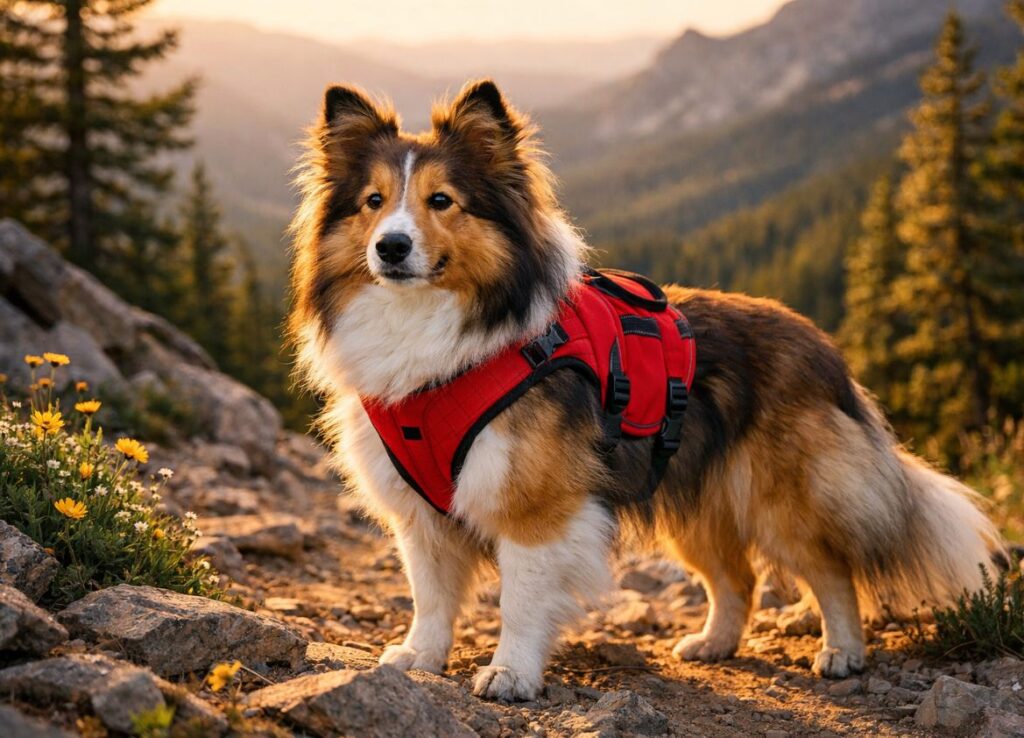
Yes, Shelties (Shetland Sheepdogs) make good hiking dogs for most trail conditions. They’re agile, energetic, and highly trainable, which makes them natural trail companions. However, their thick double coat can cause overheating in hot weather, and their herding instincts need management around wildlife and other hikers.
Key Takeaways
- Shelties are athletic, intelligent dogs that handle moderate to challenging trails well
- Their double coat provides protection in cold and mild weather but requires extra care in heat
- Shelties typically weigh 15–25 lbs. making them easy to manage on the trail
- High trainability means they respond well to trail commands like “leave it” and “heel”
- They need at least 45–60 minutes of exercise daily, so hiking fits their energy level perfectly
- Herding instincts may kick in around wildlife, children, or cyclists on the trail
- Puppies under 18 months should avoid long or steep hikes to protect developing joints
- Always carry water for your Sheltie they don’t self-regulate heat as well as larger breeds
- Shelties can be vocal, which matters on trails where quiet is expected
- They thrive in cooler climates and mountain terrain more than desert or beach hikes
What Makes Shelties Physically Suited for Hiking?
Shelties are built for movement. Originally bred to herd livestock across the rugged Shetland Islands of Scotland, they carry natural endurance and agility in their DNA.
Here’s a quick breakdown of their physical traits and how each one affects trail performance:
| Physical Trait | Hiking Benefit | Potential Challenge |
|---|---|---|
| Weight: 15–25 lbs | Easy to lift over obstacles | Less stamina than larger breeds on very long hikes |
| Double coat | Insulation in cold/wet weather | Overheating in temps above 75°F |
| Compact, agile build | Handles uneven terrain well | None significant |
| Strong hindquarters | Good climbing ability | Watch for hip issues in older dogs |
| Sensitive paw pads | Responsive to terrain | Need protection on hot pavement or sharp rock |
Bottom line: A healthy adult Sheltie between 2 and 8 years old can handle most day hikes with ease. Their size is actually an advantage on narrow or technical trails where larger dogs struggle.
Do Shelties Have the Stamina for Long Trails?
Shelties have solid stamina for their size, but they’re not marathon runners. A well-conditioned Sheltie can comfortably handle 5 to 10 miles of hiking per day on moderate terrain.
What affects their endurance:
- Age: Dogs between 2–7 years old are at peak fitness
- Conditioning: A Sheltie that walks 45 minutes daily will handle trails much better than a sedentary one
- Heat: Stamina drops fast in temperatures above 75°F due to their thick coat
- Terrain: Rocky or steep trails burn energy faster than flat paths
💡 Smart tip: Build trail stamina gradually. Start with 2–3 mile hikes and increase distance over several weeks before attempting longer routes.
If your Sheltie is panting heavily, lagging behind, or refusing to move, those are clear signals to stop and rest. Don’t push past those signs.
How Does a Sheltie’s Temperament Affect Trail Behavior?
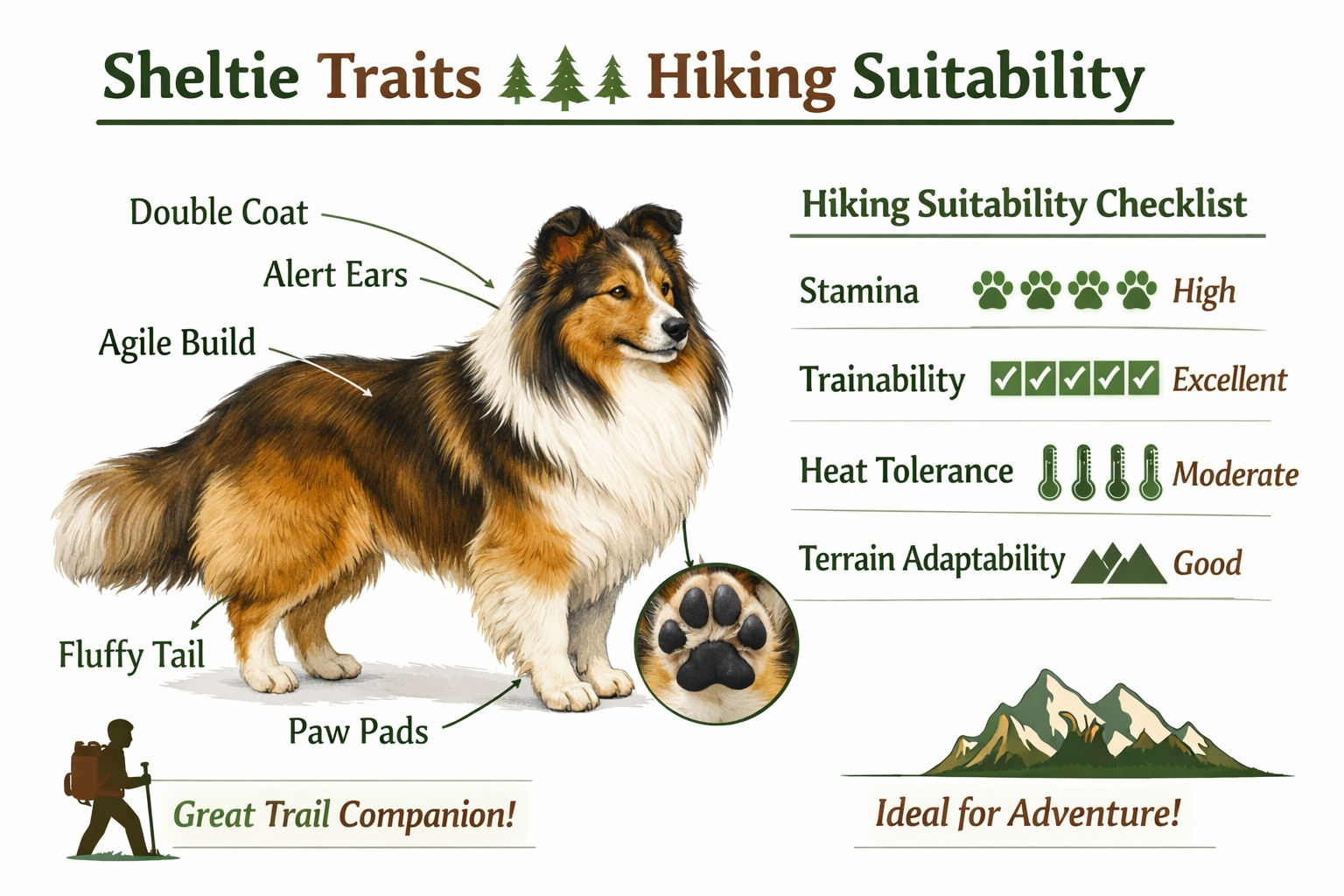
This is where Shelties shine. They’re ranked among the most trainable dog breeds, which directly translates to safer, more enjoyable hikes.
Positive temperament traits for hiking:
- Eager to please and responsive to commands
- Highly alert, which helps them notice trail hazards
- Strong bond with their owner means they stay close naturally
- Adaptable to new environments when properly socialized
Traits that need management on the trail:
- Herding instinct: Shelties may try to “herd” joggers, cyclists, or children they encounter. Training a solid “leave it” command before hitting the trail is essential.
- Vocal nature: Shelties bark. On a quiet nature trail or in a campground, this can be disruptive. Work on a “quiet” command early.
- Sensitivity: They can get anxious in chaotic or unfamiliar environments. Gradual exposure to trail sounds and crowds helps.
A well-socialized Sheltie with basic obedience training is genuinely one of the better hiking companions in the small-to-medium dog category.
Do Shelties Make Good Hiking Dogs in Hot or Cold Weather?
Weather is the biggest variable when deciding whether to bring your Sheltie on a hike.
Cold weather: Shelties were bred for the cold, damp Shetland Islands. They handle cool temperatures (below 60°F) very well. Their double coat acts as insulation, and they often seem more energetic in cooler conditions.
Hot weather: This is where you need to be careful. In temperatures above 75°F, especially with high humidity, Shelties can overheat quickly. Signs of heat stress include excessive panting, drooling, slowing down, and bright red gums.
Practical rules for hiking with a Sheltie in warm weather:
- Hike early morning or late evening to avoid peak heat
- Carry at least 8 oz of water per hour of hiking for your dog
- Take shade breaks every 20–30 minutes
- Wet their paws and belly to help cool them down
- Skip the hike entirely if temps exceed 85°F
Cold weather precautions:
- Below 20°F, even Shelties need a dog coat on exposed skin
- Check paws for ice buildup between toes
- Avoid frozen lakes or icy trail sections
Do Shelties Make Good Hiking Dogs for Beginners?
Yes, and this is one of the strongest arguments for choosing a Sheltie as a trail companion. Their trainability and size make them accessible for first-time dog hikers.
Why Shelties work well for beginner hikers:
- Lightweight enough to carry if they get injured or tired
- Respond quickly to basic commands, reducing trail stress
- Their natural herding instinct keeps them close to you
- Less intimidating to other hikers than large breeds
Where beginners need to pay attention:
- Grooming: That double coat needs brushing 2–3 times per week, and trail debris (burrs, mud) adds to the workload
- Leash laws: Always check if the trail requires leashes. Shelties off-leash near wildlife can be unpredictable due to herding drive
- Paw care: Inspect and clean paws after every hike
Choose a Sheltie hiking companion if: You want a smart, loyal, manageable trail dog that responds well to training and stays close to you naturally.
Reconsider if: You plan to do desert hikes in summer, multi-day backpacking in extreme heat, or off-leash trails where herding behavior could cause problems.
What Gear Does a Sheltie Need for Hiking?
Keep it simple but practical. Here’s what actually matters:
- Harness: A well-fitted Y-shaped harness distributes pressure evenly and is safer than a collar on uneven terrain
- Collapsible water bowl: Lightweight and essential
- Dog boots: Optional, but useful on hot pavement, sharp rock, or icy trails
- First aid kit: Include tweezers for ticks, gauze, and antiseptic wipes
- ID tag and microchip: Non-negotiable on any trail
You don’t need to spend a lot. A quality harness ($25–$50) and a collapsible bowl ($10–$15) cover the basics for most day hikes.
FAQ: Shelties and Hiking
Q: How far can a Sheltie hike in one day?
A healthy adult Sheltie can hike 5 to 10 miles on moderate terrain. Condition them gradually and watch for signs of fatigue.
Can Sheltie puppies go hiking?
Short, easy walks on flat trails are fine. Avoid long or steep hikes until your Sheltie is at least 18 months old, when their growth plates are fully developed.
Are Shelties good off leash on trails?
Only in areas where it’s legal and safe. Their herding instinct can cause them to chase wildlife or approach other hikers unexpectedly. Strong recall training is required before going off leash.
Do Shelties need boots for hiking?
Not always. Boots help on hot pavement, icy trails, or sharp rocky terrain. On soft forest trails, most Shelties do fine without them.
How do I know if my Sheltie is too hot on a hike?
Watch for heavy panting, slowing down, bright red gums, or excessive drooling. Move to shade immediately, offer water, and wet their paws and belly.
Are Shelties good for mountain hiking specifically?
Yes. Their agile, compact build and strong hindquarters make them well-suited for climbing. Cooler mountain temperatures also suit their double coat.
Do Shelties bark a lot on trails?
They can. Shelties are naturally vocal. Training a “quiet” command and socializing them to trail environments early reduces this significantly.
How much water does a Sheltie need on a hike?
Plan for roughly 8 oz of water per hour of activity, more in warm weather. Always offer water every 20–30 minutes on the trail.
Conclusion
So, do Shelties make good hiking dogs? The straightforward answer is yes, for most hikers and most trail conditions. They’re athletic, smart, loyal, and the right size for both beginner and experienced trail users.
The main things to manage are heat exposure, herding instincts, and building their stamina gradually. Get those right, and a Sheltie is one of the most rewarding dogs you can bring on a trail.
Your next steps:
- Start with short, flat trails (2–3 miles) to assess your Sheltie’s current fitness level
- Train “leave it,” “heel,” and “quiet” commands before your first real hike
- Invest in a good harness and always carry water
- Check trail leash rules and weather forecasts before every outing
- Gradually increase distance and elevation as your dog’s conditioning improves
A well-prepared Sheltie and a well-prepared owner make a great team on the trail.
References
- American Kennel Club. (2021). Shetland Sheepdog breed information. https://www.akc.org/dog-breeds/shetland-sheepdog/
- Veterinary Centers of America. (2020). Heat stroke in dogs: signs and prevention. https://vcahospitals.com/know-your-pet/heat-stroke-in-dogs
- PetMD Editorial Team. (2022). Exercise needs by dog breed. https://www.petmd.com/dog/exercise