

Learning how to run a camper on battery power is the key to true freedom on the road. Whether you want to camp in remote locations or simply reduce hookup costs, battery power makes it all possible.
This guide covers everything you need to know about powering your RV with batteries. You’ll learn about different battery types, how to calculate your power needs, and the best practices for extending your off-grid time.
Understanding Your Camper’s Power Needs
Before choosing batteries, you need to know how much power your camper uses. Most RV appliances run on 12V DC power or require an inverter to convert battery power to 120V AC.
Start by listing all your electrical devices. Check their power ratings, usually found on labels or in manuals. Note whether they use DC or AC power.
Common RV Power Consumers
- LED lights: 2-5 watts each
- Water pump: 5-7 amps when running
- Furnace fan: 6-8 amps
- Refrigerator: 2-3 amps on DC mode
- TV: 15-30 watts
- Laptop charger: 45-90 watts
- Coffee maker: 800-1200 watts
Multiply watts by hours of daily use to get watt-hours. For DC devices, divide by 12 to get amp-hours. This gives you your daily power budget.

Types of RV Batteries
Choosing the right battery type affects your budget, maintenance needs, and camping style. Here are the main options available today.
Lead-Acid Batteries
Traditional lead-acid batteries are the cheapest option upfront. They work well for weekend camping but have limitations for extended boondocking.
Pros: Low initial cost, widely available, easy to replace
Cons: Heavy weight, short lifespan, only 50% usable capacity, require maintenance
AGM Batteries
Absorbed Glass Mat (AGM) batteries offer better performance than standard lead-acid. They’re maintenance-free and handle deep discharges better.
Pros: No maintenance, faster charging, better cold weather performance
Cons: Higher cost than lead-acid, still limited to 50% discharge depth
Lithium Batteries
Lithium iron phosphate (LiFePO4) batteries are the premium choice for serious boondockers. They’re lighter, last longer, and provide more usable power.
Pros: 90-100% usable capacity, 10+ year lifespan, lightweight, fast charging
Cons: High upfront cost, may need special charging systems
Calculating Battery Capacity
Once you know your daily power needs, you can size your battery bank properly. Always plan for more capacity than your calculated minimum needs.
For lead-acid and AGM batteries, multiply your daily amp-hour needs by 2. This accounts for the 50% discharge limit and provides a safety buffer.
For lithium batteries, multiply by 1.3 to 1.5. This gives you extra capacity for cloudy days or unexpected power needs.
Example Calculation
Daily power needs: 100 amp-hours
- Lead-acid/AGM: 200 amp-hour battery bank minimum
- Lithium: 130-150 amp-hour battery bank
Installing Your Battery System
Proper installation ensures safety and maximum performance from your battery system. Location, ventilation, and wiring all matter.
Battery Placement
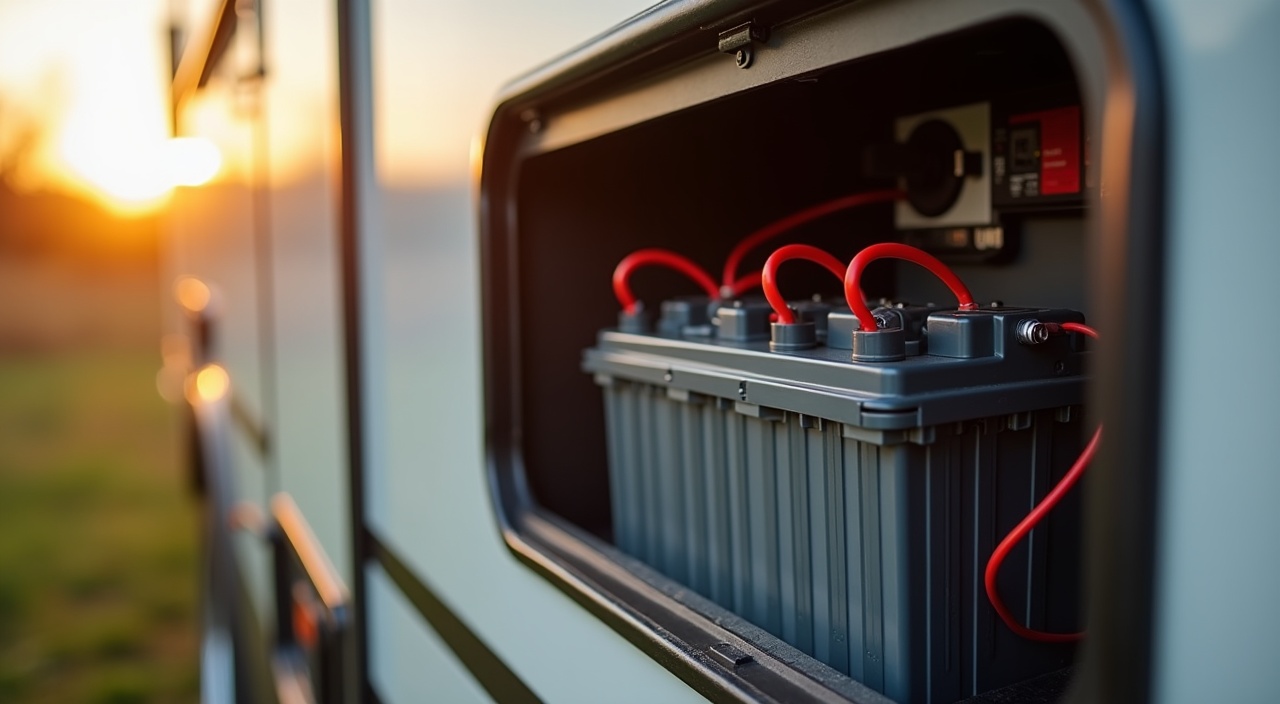
Install batteries in a well-ventilated compartment away from heat sources. The location should be easily accessible for maintenance but secure during travel.
Lead-acid batteries produce hydrogen gas during charging. Never install them in enclosed living spaces without proper ventilation.
Wiring and Safety
Use appropriate wire sizes for your system voltage and current. Install fuses or circuit breakers near the positive terminal of each battery bank.
Connect batteries of the same type, age, and capacity. Mix different battery chemistries or capacities only with proper battery management systems.
Charging Your Batteries
Multiple charging sources keep your batteries topped off during extended trips. Each method has its place in a well-designed system.
Solar Panels
Solar panels provide quiet, maintenance-free charging during daylight hours. Size your solar array to replace your daily power consumption on sunny days.
A general rule: 100 watts of solar per 30 amp-hours of daily consumption works for most climates.
Alternator Charging
Your vehicle’s alternator charges batteries while driving. Install a DC-to-DC charger for lithium batteries or long wire runs to the battery compartment.
Plan driving time into your power budget. Even 2-3 hours of driving adds significant charge to your batteries.
Generator Backup
A generator provides reliable charging regardless of weather conditions. Choose one sized appropriately for your battery charger and essential loads.
Run generators during acceptable hours and consider noise levels in campgrounds.
Power Management Strategies
Smart power management extends your battery life and off-grid time. Small changes in habits make big differences in power consumption.
Energy-Efficient Practices
- Use LED bulbs throughout your RV
- Run the refrigerator on propane when possible
- Charge devices during peak solar hours
- Use fans instead of AC when temperatures allow
- Cook with propane instead of electric appliances
Monitoring Your System
Install a battery monitor to track your power usage and charging. This helps you understand your consumption patterns and avoid over-discharge.
Good monitors show voltage, current, amp-hours consumed, and time remaining at current usage levels.
Maintaining Your Battery System
Proper maintenance extends battery life and prevents expensive replacements. Different battery types have different requirements.
Lead-Acid and AGM Maintenance
Check water levels monthly in flooded lead-acid batteries. Keep terminals clean and apply protective spray to prevent corrosion.
Equalize flooded batteries monthly if your charger has this feature. Avoid deep discharges below 50% capacity whenever possible.
Lithium Battery Care
Lithium batteries need minimal maintenance but benefit from occasional full charging cycles. Keep them at moderate temperatures when stored.
Most lithium batteries have built-in management systems that protect against overcharge and over-discharge.
Common Issues
Even well-maintained systems can develop problems. Knowing how to diagnose issues saves time and money on the road.
Battery Won’t Hold Charge
This usually indicates old batteries, parasitic loads, or charging system problems. Test individual battery voltage and check for power draws when everything is turned off.
Slow Charging
Check connections for corrosion or looseness. Verify that your charger settings match your battery type. Shaded solar panels or dirty panels reduce charging significantly.
Inverter Problems
Low battery voltage causes inverter shutdowns. Check battery state of charge first. Overloading the inverter also triggers protective shutdowns.
Upgrading Your System
As your camping style evolves, your power needs may change. Plan upgrades carefully to avoid compatibility issues.
Adding more batteries requires matching types and ages when possible. Mixing old and new batteries reduces overall performance.
When switching battery chemistries, ensure your charging system is compatible. Lithium batteries often need different charge profiles than lead-acid types.
Cost Considerations
Battery systems represent a significant investment, but they pay dividends in camping flexibility and reduced hookup fees.
Budget for the complete system, not just batteries. You’ll need appropriate chargers, monitoring equipment, and safety devices.
Consider the total cost of ownership. Lithium batteries cost more initially but last longer and provide more usable power than lead-acid options.
Safety First
Battery systems store significant energy and require respect for safety procedures. Always disconnect power when working on electrical systems.
Wear safety glasses and gloves when handling batteries. Keep tools insulated to prevent accidental shorts across terminals.
Install smoke and gas detectors in battery compartments. Have appropriate fire extinguishers readily available.
Frequently Asked Questions
How long can I run my camper on battery power?
This depends on your power consumption and battery capacity. A typical setup might last 2-4 days with conservative usage, or up to a week or more with lithium batteries and solar charging.
What size battery bank do I need for my RV?
Calculate your daily amp-hour usage, then multiply by 2 for lead-acid batteries or 1.3-1.5 for lithium batteries. A typical setup ranges from 200-400 amp-hours total capacity.
Can I mix different types of batteries?
It’s not recommended to mix battery chemistries (like lithium with lead-acid) without proper management systems. Always use batteries of the same type, age, and capacity when possible.
Do I need an inverter to run my camper on batteries?
You need an inverter for any 120V AC appliances. Many RV systems run on 12V DC directly from batteries, but items like microwaves, coffee makers, and some TVs require AC power.
How often should I charge my RV batteries?
Charge batteries whenever possible to extend their life. Avoid letting lead-acid batteries drop below 50% charge, while lithium batteries can safely discharge to 10-20% capacity.